Amida Nyorai

Amida Butsu – Achieving Buddhism from the Pure Land
Amida Nyorai (often called Amida Butsu) is a celestial Buddha who
has the ability to intervene in this world and save people in a
god-like manner. He has passed the bodhisattva path and has achieved
superhuman powers giving him the power to live in the heavens.
Amida Butsu is considered as the “Buddha of Infinite Light.” He is a
celestial Buddha also known in Indian Sanskrit as Amitābha. He is the
principal Buddha for East Asian Buddhism and is known for his long life
and has total appreciation and the deep knowledge of the
individualities of different people. In Indian Buddhism or Vajrayana,
Amitābha or Amida Butsu is the oldest of all the known Buddhas.
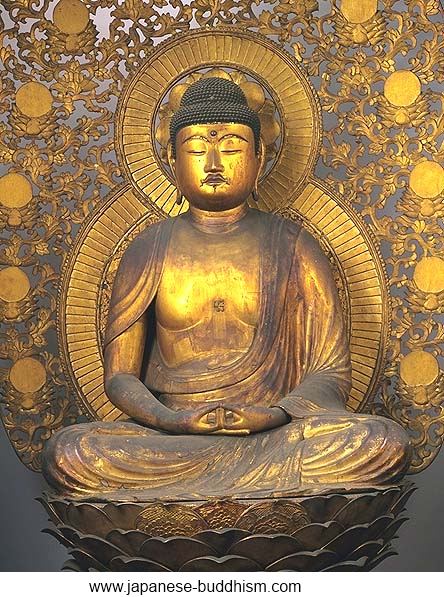
He was either a monk or a former king (the
legends got lost in time) who rejected his throne and then became a
Buddha by committing to forty eight vows.
According to legend, he gained great prominence after saving so many
live and he was able to achieve his goal of becoming Buddha when he was
still alive.
It is believed that by chanting “Namu Amida Butsu”, Amitābha
Buddha’s darani, anyone can obtain birth in the Pure Land. This chant
is said to reject anything negative that can block the way to
Buddhahood. In some schools in Japan, the chanting is a form of
thanksgiving to the Amitābha Buddha so that rebirth is assured in the
Pure Lands and thereafter.
Amida is very close to a god in Jodo shu and Jodo Shin shu, despite
the fact that there is no god in Buddhism. For them, Amida Butsu is the
closest thing to a god.
Basic Doctrines
Because of his deeds and prayers, he was able to create the
“Pure Land” or jōdo in Japanese which is found in the extreme west
beyond the boundaries of the real world. Through his vows he made it
possible for others to ask him for help regarding rebirth in that land
of pure happiness or heaven. In that land, those who ask for his
guidance will have the potential of becoming a Buddha themselves. When
they succeed, they can come back to earth and help the people left
behind, thus attaining the status of Buddhisatva.
Iconography
 It
It
is difficult to separate Amida Nyorai from other Buddhas as not much
mark their individuality, but Amida Butsu can be identified by his
mudrā. He is easily seen as sitting down and meditating with his thumbs
touching and fingers together, sometimes he is holding a lotus on one
hand while the other hand is in the meditating position.
 If
If
he is seen standing, then his left arm is naked and points down with
the thumb and forefinger touching each other while his right hand is
palms up with thumb and forefinger again touching each other. This
position means that he is all wise (the right hand) and he is there to
help those who cannot help themselves (left hand pointing down).
(the three standing statues to the left are all representations of Amida Nyorai and can be found at Jodo-ji in Hyogo.)
Archaeological Origins
The first evidence of Amida Butsu is a statue which can be
viewed in Mathura Museum. It is dated to as far back as the 2nd century
CE or Kusāna Empire. The sutra of the Pure Lands reached China around
180 CE.
Other Names
Amida Nyorai is the name of Amitābha in Japanese but he is also known in other countries as well.
The Vietnamese call him A-di-đà Phật, in Korea he is known as Amit’a Bul, in Tibetan od.dpag.med, and in Amitāyus, tshe.dpag.med.
My Own Experience
I did not know much about Amida Butsu as I am more inclined toward
Esoteric (shingon Buddhism) and in Shingon, albeit important, Amida is
not a major player. It must be because the emphasis is so strong in
Jodo shu and Jodo shin Shu that they kind of coined him.
He is still important though as he is master of the Western Pure
Land, which is important in the Kongokai (Diamond realm) mandala
meditation. He holds a central role in this meditation.
I also had been told about The Namu Amida Butsu mantra but never practiced it myself. I do utter the Esoteric mantra:
Mantra
おん あみりた ていぜい から うん
On Amirita teizei Karaun
Om save us in the glory of the Deathless One hûm!
Amida Nyorai’s 48 Vows
Here is a long
section about Amida Nyorai’s 48 vows. Please read them if you are
interested. They have been translated from the Chinese by
Mr. Inagaki Hisao.
- If,
when I attain Buddhahood, there should be in my land a hell, a realm of
hungry spirits or a realm of animals, may I not attain perfect
Enlightenment.
- If,
when I attain Buddhahood, humans and devas in my land should after
death fall again into the three evil realms, may I not attain perfect
Enlightenment.
- If,
when I attain Buddhahood, humans and devas in my land should not all be
the color of pure gold, may I not attain perfect Enlightenment.
- If,
when I attain Buddhahood, humans and devas in my land should not all be
of one appearance, and should there be any difference in beauty, may I
not attain perfect Enlightenment.
- If,
when I attain Buddhahood, humans and devas in my land should not
remember all their previous lives, not knowing even the events which
occurred during the previous hundred thousand kotis of nayutas of
kalpas, may I not attain perfect Enlightenment.
- If,
when I attain Buddhahood, humans and devas in my land should not
possess the divine eye of seeing even a hundred thousand kotis of
nayutas of Buddha-lands, may I not attain perfect Enlightenment.
- If,
when I attain Buddhahood, humans and devas in my land should not
possess the divine ear of hearing the teachings of at least a
hundred thousand kotis of nayutas of Buddhas and should not remember
all of them, may I not attain perfect Enlightenment.
- If,
when I attain Buddhahood, humans and devas in my land should not
possess the faculty of knowing the thoughts of others, at least those
of all sentient beings living in a hundred thousand kotis of nayutas of
Buddha-lands, may I not attain perfect Enlightenment.
- If,
when I attain Buddhahood, humans and devas in my land should not
possess the supernatural power of travelling anywhere in one instant,
even beyond a hundred thousand kotis of nayutas of Buddha-lands, may I
not attain perfect Enlightenment.
- If,
when I attain Buddhahood, humans and devas in my land should give rise
to thoughts of self-attachment, may I not attain perfect Enlightenment.
- If,
when I attain Buddhahood, humans and devas in my land should not dwell
in the Definitely Assured State and unfailingly reach Nirvana, may I
not attain perfect Enlightenment.
- If,
when I attain Buddhahood, my light should be limited, unable to
illuminate at least a hundred thousand kotis of nayutas of
Buddha-lands, may I not attain perfect Enlightenment.
- If,
when I attain Buddhahood, my life-span should be limited, even to the
extent of a hundred thousand kotis of nayutas of kalpas, may I not
attain perfect Enlightenment.
- If,
when I attain Buddhahood, the number of the shravakas in my land could
be known, even if all the beings and pratyekabuddhas living in this
universe of a thousand million worlds should count them during a
hundred thousand kalpas, may I not attain perfect Enlightenment.
- If,
when I attain Buddhahood, humans and devas in my land should have
limited life-spans, except when they wish to shorten them in accordance
with their original vows, may I not attain perfect Enlightenment.
- If,
when I attain Buddhahood, humans and devas in my land should even hear
of any wrongdoing, may I not attain perfect Enlightenment.
- If,
when I attain Buddhahood, innumerable Buddhas in the land of the ten
quarters should not all praise and glorify my Name, may I not attain
perfect Enlightenment.
- If,
when I attain Buddhahood, sentient beings in the lands of the ten
quarters who sincerely and joyfully entrust themselves to me, desire to
be born in my land, and call my Name, even ten times, should not be
born there, may I not attain perfect Enlightenment. Excluded, however,
are those who commit the five gravest offenses and abuse the right
Dharma.
- If,
when I attain Buddhahood, sentient beings in the lands of the ten
quarters, who awaken aspiration for Enlightenment, do various
meritorious deeds [268b] and sincerely desire to be born in my land,
should not, at their death, see me appear before them surrounded by a
multitude of sages, may I not attain perfect Enlightenment.
- If,
when I attain Buddhahood, sentient beings in the lands of the ten
quarters who, having heard my Name, concentrate their thoughts on my
land, do various meritorious deeds and sincerely transfer their merits
towards my land with a desire to be born there, should not eventually
fulfill their aspiration, may I not attain perfect Enlightenment.
- If,
when I attain Buddhahood, humans and devas in my land should not all be
endowed with the thirty-two physical characteristics of a Great Man,
may I not attain perfect Enlightenment.
- If,
when I attain Buddhahood, bodhisattvas in the Buddha-lands of other
quarters who visit my land should not ultimately and unfailingly reach
the Stage of Becoming a Buddha after One More Life, may I not attain
perfect Enlightenment. Excepted are those who wish to teach and guide
sentient beings in accordance with their original vows. For they wear
the armor of great vows, accumulate merits, deliver all beings from
birth-and-death, visit Buddha-lands to perform the bodhisattva
practices, make offerings to Buddhas, Tathagatas, throughout the ten
quarters, enlighten uncountable sentient beings as numerous as the
sands of the River Ganges, and establish them in the highest, perfect
Enlightenment. Such bodhisattvas transcend the course of practice of
the ordinary bodhisattva stages, manifest the practices of all the
bodhisattva stages, and actually cultivate the virtues of Samantabhadra.
- If,
when I attain Buddhahood, bodhisattvas in my land, in order to make
offerings to Buddhas through my transcendent power, should not be able
to reach immeasurable and innumerable kotis of nayutas of Buddha-lands
in as short a time as it takes to eat a meal, may I not attain perfect
Enlightenment.
- If,
when I attain Buddhahood, bodhisattvas in my land should not be able,
as they wish, to perform meritorious acts of worshipping the Buddhas
with the offerings of their choice, may I not attain perfect
Enlightenment.
- If,
when I attain Buddhahood, bodhisattvas in my land should not be able to
expound the Dharma with the all-knowing wisdom, may I not attain
perfect Enlightenment.
- If,
when I attain Buddhahood, there should be any bodhisattva in my land
not endowed with the body of the Vajra-god Narayana, may I not attain
perfect Enlightenment.
- If,
when I attain Buddhahood, sentient beings should be able, even with the
divine eye, to distinguish by name and calculate by number all the
myriads of manifestations provided for the humans and devas in my land,
which are glorious and resplendent and have exquisite details beyond
description, may I not attain perfect Enlightenment.
- If,
when I attain Buddhahood, bodhisattvas in my land, even those with
little store of merit, should not be able to see the Bodhi-tree
which has countless colors and is four million li in height, may I not
attain perfect Enlightenment.
- If,
when I attain Buddhahood, bodhisattvas in my land should not acquire
eloquence and wisdom in upholding sutras and reciting and expounding
them, may I not attain perfect Enlightenment.
- If,
when I attain Buddhahood, the wisdom and eloquence of bodhisattvas in
my land should be limited, may I not attain perfect Enlightenment.
- If,
when I attain Buddhahood, my land should not be resplendent, revealing
in its light all the immeasurable, innumerable and inconceivable
Buddha-lands, like images reflected in a clear mirror, may I not attain
perfect Enlightenment.
- If,
when I attain Buddhahood, all the myriads of manifestations in my land,
from the ground to the sky, such as palaces, pavilions, ponds, streams
and trees, should not be composed of both countless treasures, which
surpass in supreme excellence anything in the worlds of humans and
devas, and of a hundred thousand kinds of aromatic wood, whose
fragrance pervades all the worlds of the ten quarters, causing all
bodhisattvas who sense it to perform Buddhist practices, then may I not
attain perfect Enlightenment.
- If,
when I attain Buddhahood, sentient beings in the immeasurable and
inconceivable Buddha-lands of the ten quarters, who have been touched
by my light, should not feel peace and happiness in their bodies and
minds surpassing those of humans and devas, may I not attain perfect
Enlightenment.
- If,
when I attain Buddhahood, sentient beings in the immeasurable and
inconceivable Buddha-lands of the ten quarters, who have heard my Name,
should not gain the bodhisattva’s insight into the non-arising of all
dharmas and should not acquire various profound dharanis, may I not
attain perfect Enlightenment.
- If,
when I attain Buddhahood, women in the immeasurable and inconceivable
Buddha-lands of the ten quarters who, having heard my Name, rejoice in
faith, awaken aspiration for Enlightenment and wish to renounce
womanhood, should after death be reborn again as women, may I not
attain perfect Enlightenment.
- If,
when I attain Buddhahood, bodhisattvas in the immeasurable and
inconceivable Buddha-lands of the ten quarters, who have heard my Name,
should not, after the end of their lives, always perform sacred
practices until they reach Buddhahood, may I not attain perfect
Enlightenment.
- If,
when I attain Buddhahood, humans and devas in the immeasurable and
inconceivable Buddha-lands of the ten quarters, who having heard my
Name, prostrate themselves on the ground to revere and worship me,
rejoice [269a] in faith, and perform bodhisattva practices, should not
be respected by all devas and people of the world, may I not attain
perfect Enlightenment.
- If,
when I attain Buddhahood, humans and devas in my land should not obtain
clothing, as soon as such a desire arises in their minds, and if the
fine robes as prescribed and praised by the Buddhas should not be
spontaneously provided for them to wear, and if these clothes should
need sewing, bleaching, dyeing or washing, may I not attain perfect
Enlightenment.
- If,
when I attain Buddhahood, humans and devas in my land should not enjoy
happiness and pleasure comparable to that of a monk who has exhausted
all the passions, may I not attain perfect Enlightenment.
- If,
when I attain Buddhahood, the bodhisattvas in my land who wish to see
the immeasurable glorious Buddha-lands of the ten quarters, should not
be able to view all of them reflected in the jewelled trees, just as
one sees one’s face reflected in a clear mirror, may I not attain
perfect Enlightenment.
- If,
when I attain Buddhahood, bodhisattvas in the lands of the other
quarters who hear my Name should, at any time before becoming Buddhas,
have impaired, inferior or incomplete sense organs, may I not attain
perfect Enlightenment.
- If,
when I attain Buddhahood, bodhisattvas in the lands of the other
quarters who hear my Name should not all attain the samadhi called
‘pure emancipation’ and, while dwelling therein, without losing
concentration, should not be able to make offerings in one instant to
immeasurable and inconceivable Buddhas, World-Honored Ones, may I not
attain perfect Enlightenment.
- If,
when I attain Buddhahood, bodhisattvas in the lands of the other
quarters who hear my Name should not be reborn into noble families
after their death, may I not attain perfect Enlightenment.
- If,
when I attain Buddhahood, bodhisattvas in the lands of the other
quarters who hear my Name should not rejoice so greatly as to dance and
perform the bodhisattva practices and should not acquire stores of
merit, may I not attain perfect Enlightenment.
- If,
when I attain Buddhahood, bodhisattvas in the lands of the other
quarters who hear my Name should not all attain the samadhi called
‘universal equality’ and, while dwelling therein, should not always be
able to see all the immeasurable and inconceivable Tathagatas until
those bodhisattvas, too, become Buddhas, may I not attain perfect
Enlightenment.
- If,
when I attain Buddhahood, bodhisattvas in my land should not be able to
hear spontaneously whatever teachings they may wish, may I not
attain perfect Enlightenment.
- If,
when I attain Buddhahood, bodhisattvas in the lands of the other
quarters who hear my Name should not instantly reach the Stage of
Non-retrogression, may I not attain perfect Enlightenment.
- If,
when I attain Buddhahood, bodhisattvas in the lands of the other
quarters who hear my Name should not instantly gain the first, second
and third insights into the nature of dharmas and firmly abide in the
truths realized by all the Buddhas, may I not attain perfect
Enlightenment.”
|
Return from Amida Nyorai to Buddhsit Pantheon |

New! Comments
Have your say about what you just read! Leave me a comment in the box below.